


DeRosa Music teaches over 2,000 pupils every week across 10 locations. If you’re starting guitar in Bedford, this guide covers the first decisions and habits that help you get going: choosing a guitar, buying only the essentials, understanding what lessons cover and building a simple practice routine.
Acoustic or electric: which should you choose?
There is no single best first guitar. Choose the type that suits the music you want to play and feels comfortable in your hands.
An acoustic guitar may suit you if you want to:
- Play folk, pop, singer-songwriter or country songs.
- Strum and sing without setting up an amplifier.
- Pick up the guitar and play with minimal extra equipment.
Steel-string acoustics can feel firmer under the fingers than electric guitars. If fretting notes feels unusually difficult, ask someone knowledgeable to check the guitar’s setup and string height.
An electric guitar may suit you if you want to:
- Play rock, blues, pop or metal.
- Explore riffs, effects and amplified sound.
- Start on a guitar that often has lighter strings and lower action, making the strings easier to press.
An electric guitar needs an amplifier and instrument cable to be heard at normal volume. You can also use headphones with a suitable practice amp or headphone device.

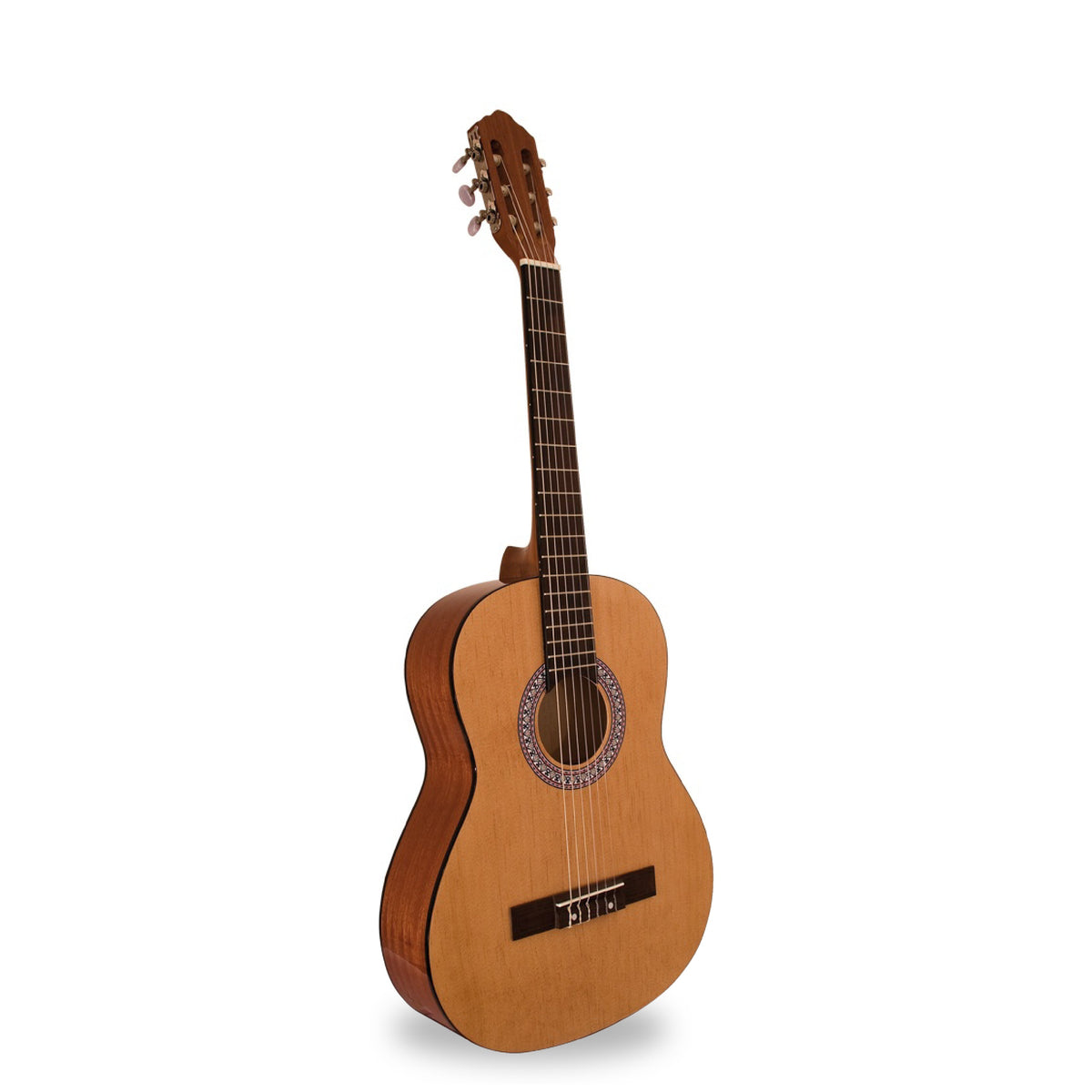
If you’re choosing for a child, body size and reach matter. A full-size guitar may be uncomfortable for some younger players. DeRosa Music Bedford stocks smaller options, including 1/2- and 3/4-size classical guitars. Try a few sizes where possible and check that the player can hold the instrument comfortably and reach the strings.
The guitar collection shows examples of the instruments available through the shop. For general differences between acoustic and electric guitars, Fender’s guide offers a useful comparison.
What gear do you actually need?
Start with the basics. You don’t need a large pedalboard or a full set of accessories before your first lesson.
For either type of guitar:
- A guitar that is comfortable and stays in tune.
- A tuner, either a clip-on model or a reliable tuning app.
- A few picks, if you plan to use one.
- A spare set of strings that matches your guitar.
For an electric guitar, add:
- A practice amplifier or suitable headphone option.
- An instrument cable.
- A strap if you plan to play standing up.
A stand or gig bag can be useful, but you can add these later if needed. Avoid buying accessories before checking which ones suit your instrument and how you plan to practise.
DeRosa Music Bedford is one of the music shops in Bedford with guitars, strings and accessories for beginners. The shop stocks guitar strings from brands including Ernie Ball, Elixir and Earthwood. You can browse the guitar strings collection and guitar accessories online.
The Bedford shop also offers restring and guitar MOT services. These can help if strings need replacing or the instrument needs a general check. If you’re unsure which string set fits your guitar, check the instrument type and ask the shop before buying.
What does a first guitar lesson cover?
A first lesson is about getting comfortable with the instrument and learning a few useful foundations. You do not need to know how to read music or play a song before you start.
At DeRosa Music Bedford, beginner guitar lessons can cover:
- How to hold the guitar and sit or stand with a comfortable posture.
- How to hold a pick and use both hands.
- How to tune the strings and identify parts of the guitar.
- How to fret notes and produce a clear sound.
- Basic rhythm, timing and reading music step by step.
As lessons continue, a teacher may introduce simple chords, chord changes, strumming patterns and short pieces. The order and pace can depend on the student’s age, interests and instrument.
A one-to-one, 30-minute guitar lesson costs £22.50. To find out about availability or ask about guitar lessons in Bedford, contact the Bedford team. This can be helpful for families looking for music lessons for kids in Bedford, as well as adults starting from scratch.
A simple practice plan for your first few months
Short, regular sessions are easier to maintain than occasional long practice sessions. Try practising for 15–20 minutes on most days, adjusting the time to suit your schedule. Fender also recommends setting a realistic practice duration and returning to a skill after a short break in its practice schedule guide.
Use this simple session structure:
- Tune and settle in: 2 minutes. Check the tuning and relax your shoulders.
- Work on one skill: 5 minutes. For example, practise placing one chord shape or picking a short pattern.
- Repeat slowly: 5 minutes. Keep the notes clean before trying to speed up.
- Play a song or phrase: 5–8 minutes. Apply the skill to something musical.
- Make a note: 1 minute. Write down one thing to revisit next time.
In the first few weeks, aim for steady tuning, relaxed posture and clear notes rather than speed. Over the next few months, build gradually: learn a few chords, practise changing between them and add a simple rhythm or song. If a task feels difficult, slow it down or ask your teacher to break it into smaller steps.

Common beginner mistakes to avoid
Buying a guitar without checking its comfort. A guitar that is too large or difficult to fret can make practice harder. Try different sizes and ask for advice before choosing.
Pressing the strings as hard as possible. Use enough pressure to make a clear note, but avoid squeezing the neck. If notes buzz or chords feel very difficult, check your finger position and ask whether the guitar needs adjustment.
Practising too fast. Slow repetitions help you hear errors and move your fingers accurately. Increase speed only when the notes are clear and the movement feels controlled.
Trying to learn too many things at once. Focus on one or two goals per practice session. Consistent progress comes from repeating small tasks, not racing through every technique.
Skipping tuning. A guitar that is out of tune makes it harder to recognise whether a chord or melody sounds right. Check the tuning at the start of each practice session.
Only playing exercises. Technique practice is useful, but include a simple song or musical phrase too. It helps connect the movements you’re learning with the music you want to play.
Ignoring discomfort. Some fingertip tenderness can happen when you first play, but sharp or persistent pain is a reason to stop and check your posture, technique or instrument setup.
Finding the right support in Bedford
A beginner does not need to have everything figured out before starting. Bring your questions about guitar size, acoustic or electric choice, and essential equipment to a lesson or the shop. A guitar teacher in Bedford can help you build good habits and give you manageable tasks between lessons.
For more detail on lesson formats and learning options, read DeRosa Music Bedford’s Ultimate Guide to Guitar Lessons in Bedford. To enquire about lessons or visit the shop, use the Bedford contact page.
Practical information: A 30-minute one-to-one guitar lesson is £22.50. Lesson availability, booking and cancellation terms should be confirmed with the Bedford team. Instrument stock and prices may change; check current listings before visiting or ordering.

